

Pan-CLIVAR Meeting and Symposium 2025 was held in Bali
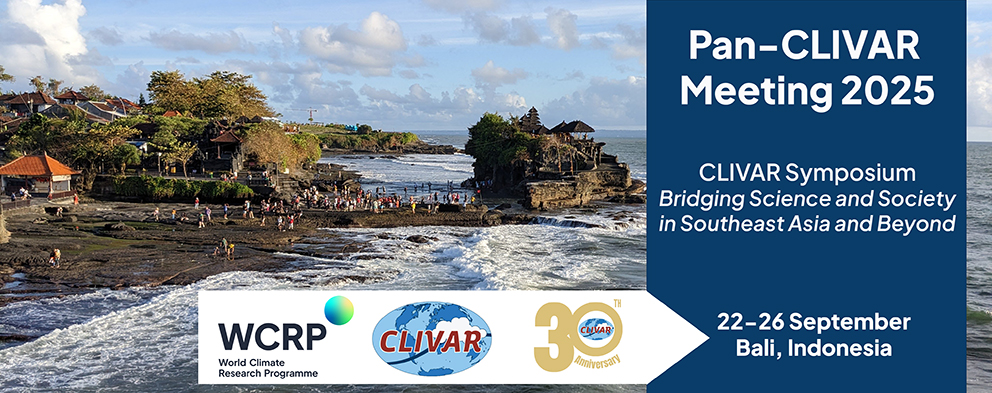
The Pan-CLIVAR Meeting 2025 was held in Bali, Indonesia, from 22nd to 26th of September 2025, attended by over 150 in-person participants from more than 35 countries. This was only the second Pan-CLIVAR Meeting after the 2014 meeting held in The Hague which was instrumental for the development of the current decadal CLIVAR science plan (2018-2028). The 2025 Pan-CLIVAR Meeting, marking CLIVAR’s 30th anniversary, was aimed at initiating the formulation of the next CLIVAR science plan.
Pan-CLIVAR 2025 brought together CLIVAR members from all panels, Research Foci (RF), and scientific steering group (SSG), guests, several representatives from partner projects and institutions, as well as ocean-climate researchers, professionals, and students who participated in the CLIVAR international symposium in the middle of the week. Pan-CLIVAR 2025 comprised of plenary sessions, meetings of the SSG, panels and RF, a session on early career researchers, two side events, and a symposium consisting of 12 sessions and 3 CLIVAR capability breakout sessions.
The event was held online and in person at Bintang Bali Resort located near the international airport for a self-contained and accessible venue. It began with an engaging SSG-only meeting on the afternoon of Monday 22nd of September. The Pan-CLIVAR Meeting was officially opened the next day by the Director of the International CLIVAR Project Office (ICPO) Dr. Agus Santoso, CLIVAR SSG Co-Chair Dr. Gokhan Danabasoglu, co-chair of the World Climate Research Programme (WCRP) joint scientific committee Professor Cristiana Stan, and representatives of Ocean University of China (OUC) and Laoshan Laboratory (China) that co-host the ICPO: the vice president of OUC Prof. Houjie Wang, and the Executive Director of the Leading Group for Foreign Affairs of Laoshan Laboratory Dr. Yanheng Xiao. Their remarks conveyed the motivation and aspiration for Pan-CLIVAR 2025 with acknowledgements of the contributions made by the organisers, volunteers and sponsors in making the event possible.
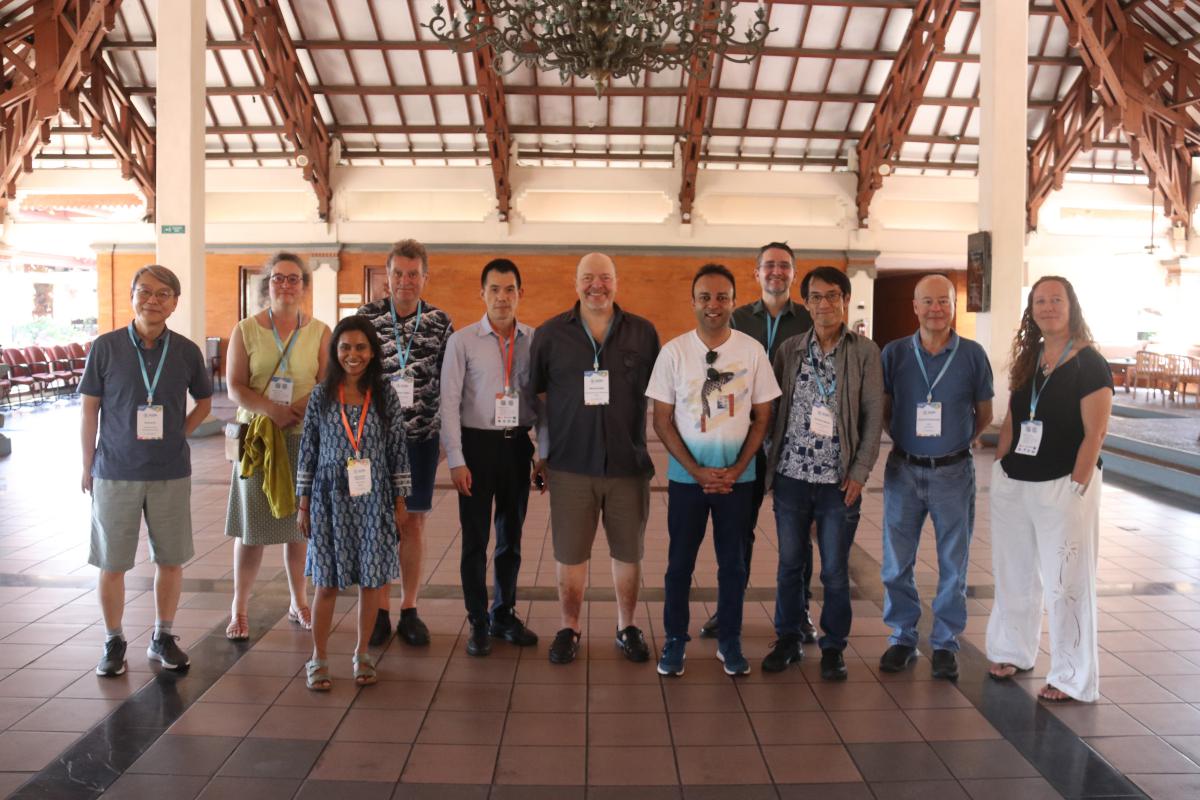
Participants of SSG Meeting at Pan-CLIVAR 2025
The opening session concluded with a plenary presentation titled ‘Connecting the WCRP Academy and the CLIVAR Community’ by Dr. Chris Lennard and Prof. Melissa Hart, co-chairs of the WCRP Academy SSG. A group of participants then stayed on for SSG session on partners engagement, and the rest joined parallel meetings of several CLIVAR panels and Research Foci. The SSG session served as a forum for engagement among the various programs and organisations to identify gaps, synergy and cross-cutting issues to sustain and foster collaborations. The panel meetings were attended by several CLIVAR members and invited guests from different countries including Indonesia.
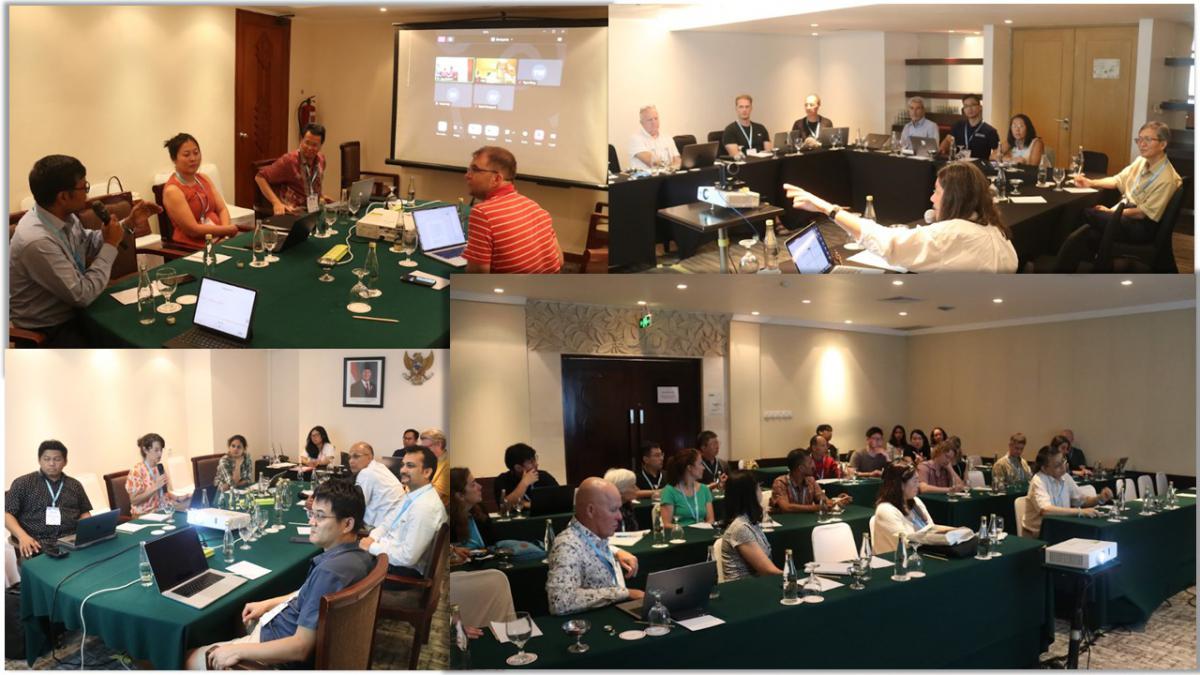
Some of the panel/cross-project meetings
Concluding the second day of the event, all participants reconvened in the Ballroom for three plenary presentations by Prof. Fredolin Tangang (University of Brunei Darussalam) on CORDEX Southeast Asia, Dr. Anna-Lena Deppenmeier (University of Liverpool) on the eastern tropical Pacific sea surface temperature, and Dr. Angela Kuhn (Scripps Institution of Oceanography, pre-recorded) on ocean biogeochemistry parameterisation in Southern Ocean modelling.
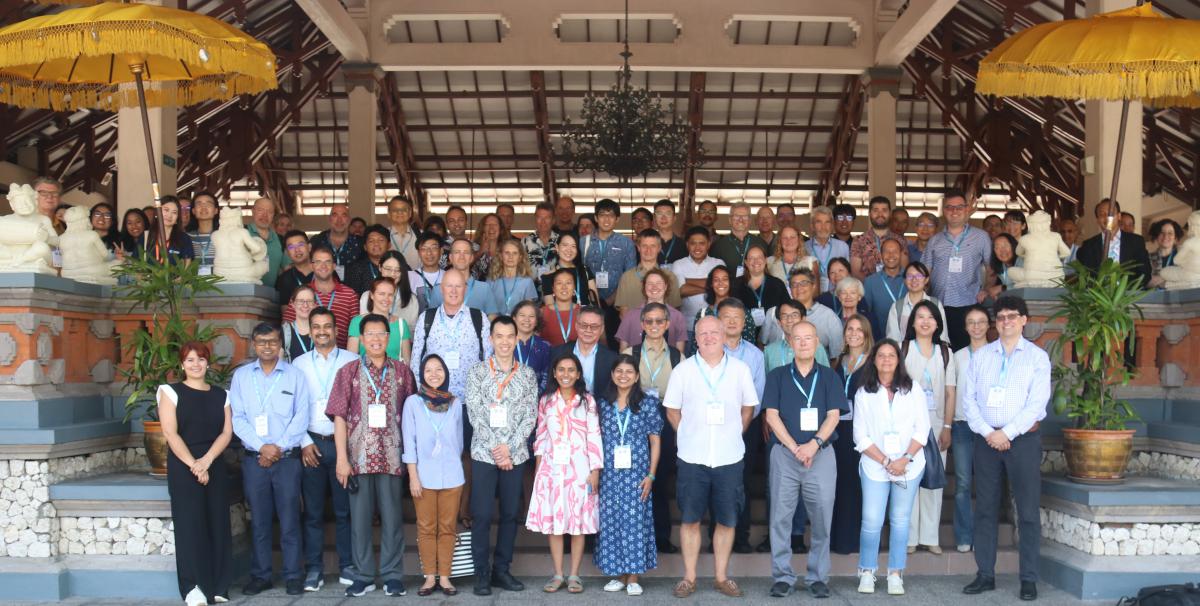
Pan-CLIVAR Meeting 2025 participants
On Day 3 (Wednesday), the CLIVAR Symposium themed ‘Bridging Science and Society in Southeast Asia and Beyond’ was opened by Governor of Bali representative, Prof. Anak Agung Suryawan (Udayana University), and was attended by representatives from the Mayor of Denpasar. Following the welcome remarks by Prof. Suryawan was a series of address by WCRP representative Dr. Hindumathi Palanisamy, CLIVAR SSG co-chair Prof. Francois Engelbrecht, the local organising committee members Prof. Ocky Karna Radjasa, chairman of BRIN (National Research and Innovation Agency of Indonesia) Research Organisation for Earth Sciences and Maritime, and Dr. Muh Farid, head of Centre for Coastal and Marine Development at Institut Teknologi Bandung (ITB), and Ning Wang, head of the Cooperation and Planning Department of the Laoshan Laboratory. They overall conveyed the strategic role of the Pan-CLIVAR 2025 for facilitating regional and international science advances in ocean-climate research through the various collaborations fostered at the event.
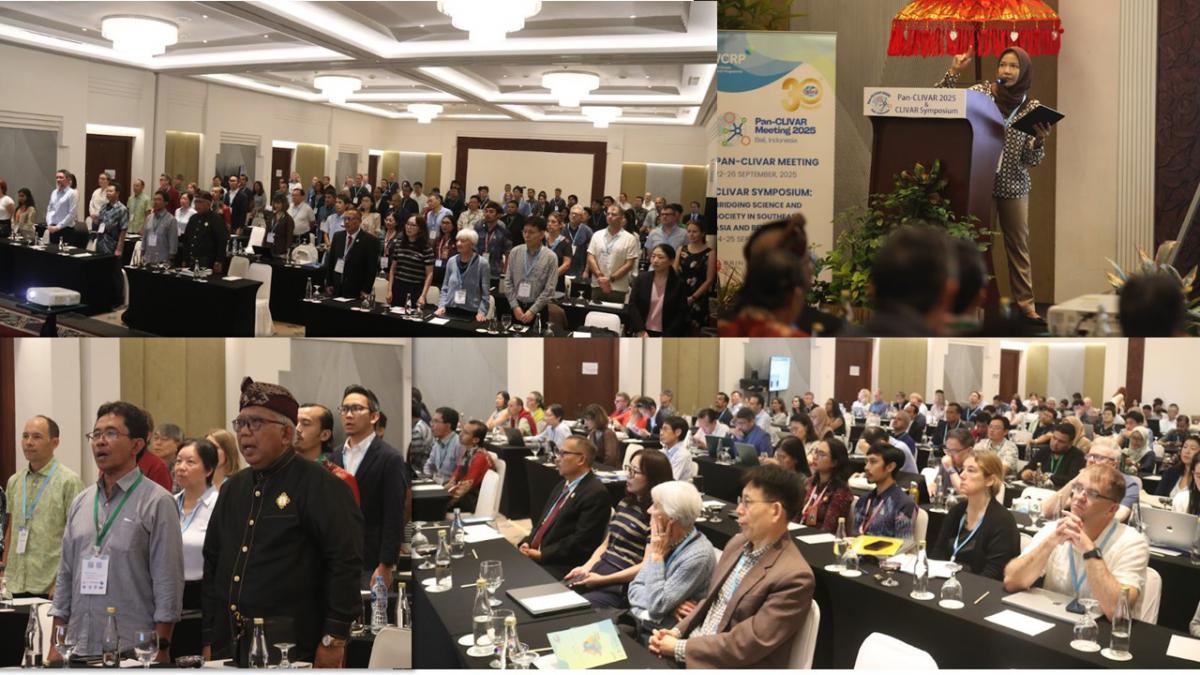
Captured moments at the opening planery of the CLIVAR Symposium: Bridging Science and Society in Southeast Asia and Beyond
The symposium proceeded with Prof. Mat Collins, symposium committee lead, introducing the CLIVAR Symposium and a research topic in Frontiers in Climate journal which was created specifically for the event with fee waivers available. Two keynote presentations concluded the morning session, delivered by Dr. Supari, head of Climate Variability Analysis Division at BMKG (Badan Meteorologi, Klimatologi, dan Geofisika) of Indonesia on El Niño 2023/24 impact prediction, and Dr. Angelique Melet, head of Ocean Climate Team at Mercator Ocean International in France on coordinated regional ocean climate projections.
The symposium continued with three parallel sessions on the Atmospheric Processes and Climate Dynamics, Ocean-Climate Observations and Modelling, Biogeochemical Processes and Climate Interactions, Artificial Intelligence: Role in Climate-Ocean Research and Prediction, Cascading and Compound Event - Climate Variability and Change, Ocean Processes and Extremes, and a session on Societal Impact. Poster viewing session held in the afternoon further enriched collegial exchanges among the participants. The symposium had 84 oral presentations and 35 poster presentations, led by 36 conveners from various countries. The day concluded with a cultural Balinese dinner reception.
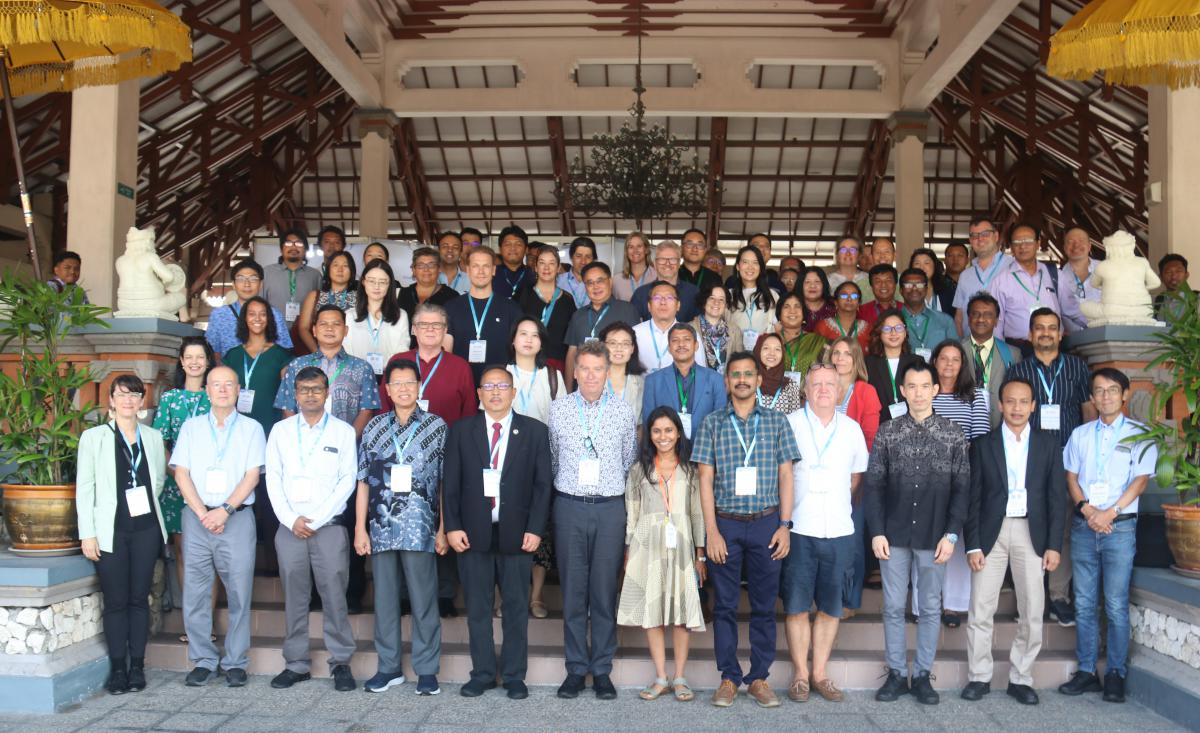
CLIVAR Symposium participants
The symposium continued in the morning of Thursday for the second part of sessions Climate Variability and Change, Ocean Processes and Extremes, and Societal Impact, followed by three breakout sessions on CLIVAR capabilities: 1) Climate, atmospheric processes, societal impacts, 2) Ocean processes, modelling, observations, biogeochemistry, and 3) Indo-Pacific Ocean, Climate, and Linkage (a PRP-IORP-TBI RF joint-session). These focus breakout sessions were aimed at assessing CLIVAR capabilities and identifying gaps to drive future initiatives. Participants then gathered in the ballroom for a closing plenary where representatives of the breakout sessions summarised their sessions. The symposium which was attended by several world’s leading scientists and early career researchers identified advances and research gaps that the community need to tackle to move the science forward and to translate the advances to societal applications.
The rest of the afternoon was occupied by parallel sessions: Marine Heatwaves (MHW) Open Session, Tropical Basin Interaction (TBI) Open Session, Early Career Research (ECR) Session, and a Side Event: Enhancing International Ocean-Climate Research Collaboration in a Changing Climate. The MHW and TBI Open Sessions were dedicated to the CLIVAR research focus (RF) groups on the respective topics to provide a forum for interactions between the groups and the wider community. The ECR Session had presentations from CLIVAR and WCRP leadership members who shared their experiences.
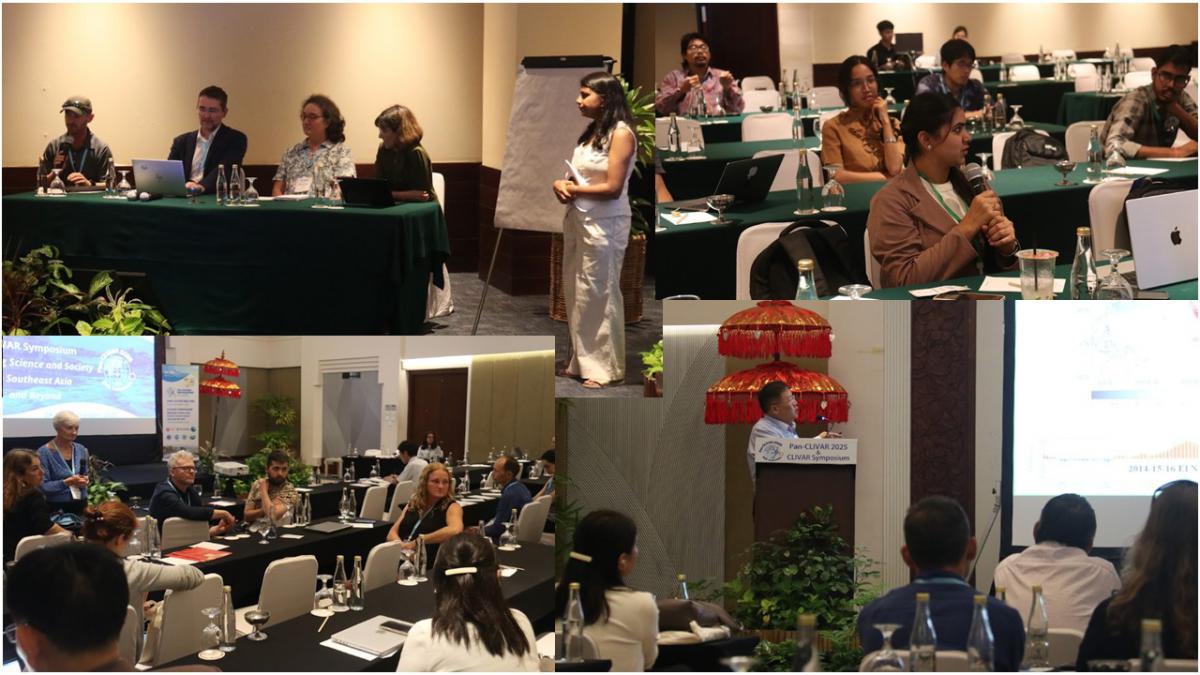
Afternoon sessions on Day 4: ECR Session (top), MHW Open Session (bottom left), TBI Open Session (bottom right)
The side event which was sponsored by the Ocean University of China covered eight topics: OceanObs’29, Global Ocean Summit and Global Ocean Research Union, sea level rise, ocean oxygen change and links to heat and carbon, paleoclimate, ocean observations in Indonesia, ocean-climate research collaboration for the Bay of Bengal, and 2nd Cooperative Study of the Kuroshio and its Adjacent Regions/CSK-2, highlighting the need for collaborations in an increasingly challenging environment.
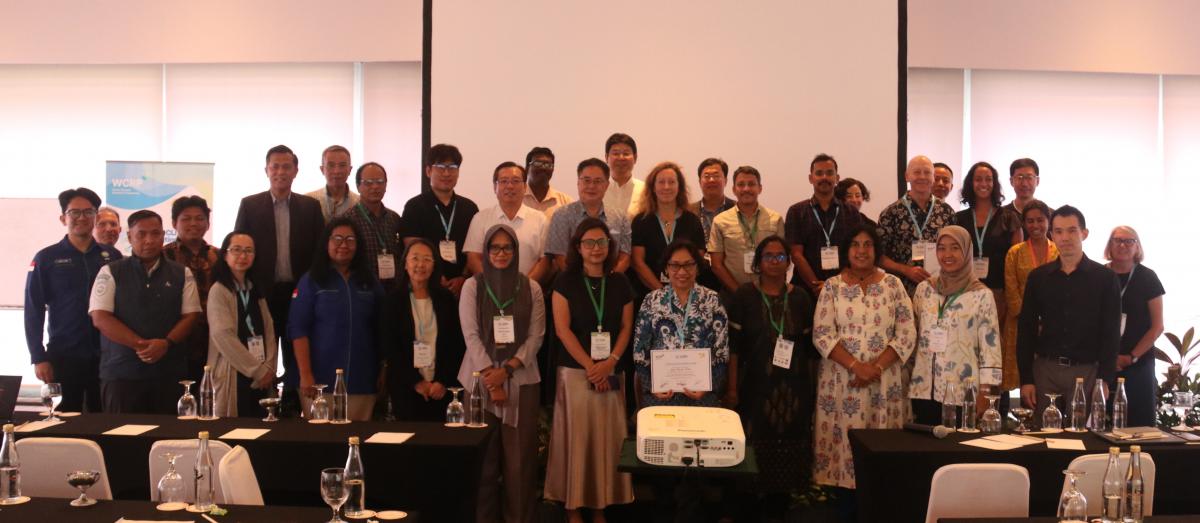
Participants of Side Event: Enhancing International Ocean-Climate Research Collaboration in a Changing Climate
To celebrate the successful week which was also dedicated for the 30th Anniversary of CLIVAR, participants gathered for dinner reception by Kuta Beach behind the meeting venue which further promoted social interactions among members and guests.
The Pan-CLIVAR 2025 conclusion on Friday 26 September remained filled with engaging scientific activities starting with a plenary session that was aimed to help initiate the next CLIVAR science plan and implementation strategy. The session began with two plenary talks by Prof. Nicole Lovenduski (Univ. Colorado Boulder) and Dr. Joanna Staneva (Hereon) speaking on Southern Ocean storms’ impact on energy and carbon cycling, and Digital Twins of the Ocean, respectively. The plenary session proceeded with CLIVAR panels and research foci representatives to report on key points that came up at their meetings during the week, and concluded with the announcement of the new CLIVAR logo, new ECR Award scheme, and acknowledgments.
Despite the plenary session formally closing the Pan-CLIVAR 2025, the event was programmed to continue into late afternoon with a side event, a closed SSG meeting, and an SSG Open Session. The interactive side event titled ‘Inclusive Innovation for Ocean and Climate Observations’, was moderated by Prof. Juliet Hermes (CLIVAR SSG member) and co-sponsored by Rip Curl Asia. It was opened by Dr. Nelly Florida Riama, BMKG leadership and Data Buoy Cooperation Panel (DBCP) Chair, followed by a series of presentations on accessible ocean observing technologies before participants headed out to the beach to demonstrate the technological application through surfing.
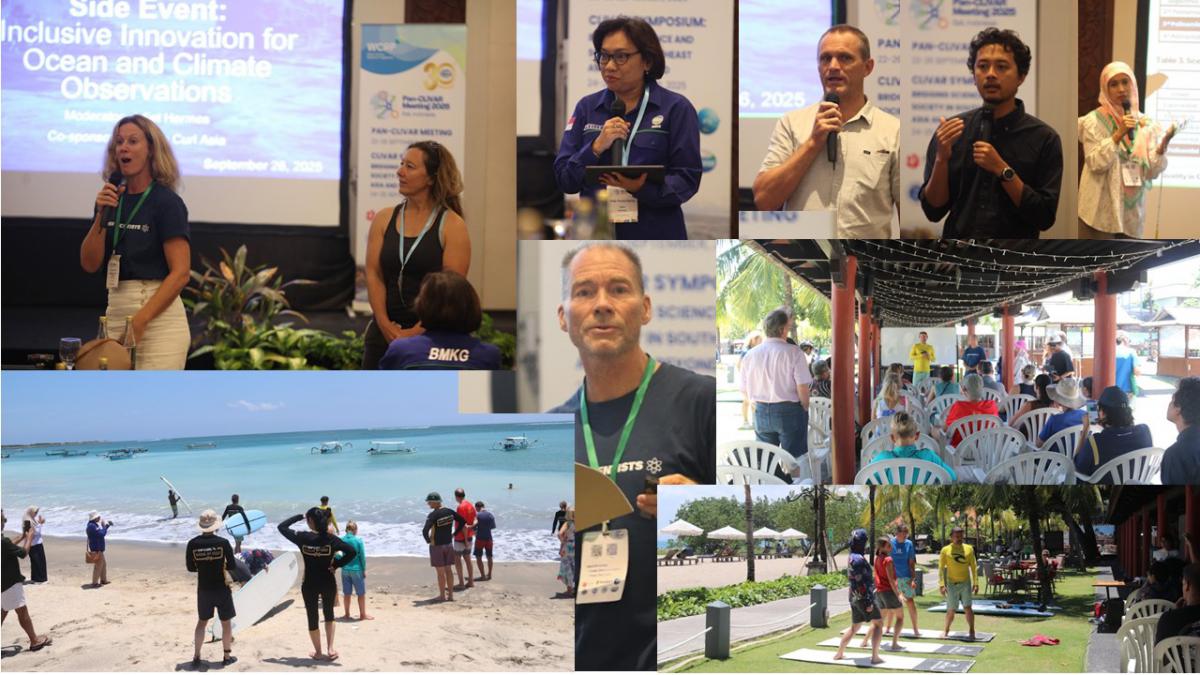
Side Event: Inclusive Innovation for Ocean and Climate Observations which involved a plenary session and surfing sensor app demonstration
Following a closed SSG meeting that was dedicated for discussing partnerships and proposals of new research foci, an open SSG session attended by CLIVAR members and partners was held which managed to gather several points to be considered for the next CLIVAR science plan and implementation strategy.
The Pan-CLIVAR 2025 concluded with reinvigorated energy and friendships among the participants to drive activities for advancing ocean-climate science to the benefit of the environment and society.
More information can be found on the event page in CLIVAR website.